
In the harsh environments of mining and heavy industry, equipment downtime is the single greatest threat to profitability. Every hour a haul truck or excavator sits idle due to engine failure or unscheduled maintenance, thousands of dollars evaporate. The culprit is often microscopic: dust.
Traditional filtration methods are fighting a losing battle. As paper filters clog with particulates, airflow is restricted, engine temperatures rise, and the risk of “dusting” the engine increases exponentially. Operators are stuck in a relentless cycle of frequent filter changes, risking contaminant entry every time a housing is opened. The solution lies in moving from passive filtration to active protection. Epura engine filters represent this shift—leveraging the science of self-cleaning technology to drastically extend asset life.
The Industrial Challenge: Why Standard Filtration Fails
To understand the value of Epura engine filters, we must first examine the limitations of industrial engine filtration as it has existed for decades. Standard cellulose or synthetic media filters operate on a depth-loading principle. They trap contaminants within their fibers until they reach capacity. Once full, the restriction (pressure drop) across the filter increases.
This leads to two critical problems affecting engine filter lifespan:
- Air Starvation: As the filter clogs, the engine struggles to breathe. This disrupts the air-to-fuel ratio, leading to incomplete combustion, increased soot generation, and higher fuel consumption.
- Maintenance Risk: To fix the restriction, a technician must physically change the filter. In a dusty mine site, opening the air intake system exposes the clean side of the intake to the very contaminants you are trying to exclude.
For companies seeking equipment longevity solutions, relying solely on static media is no longer sufficient. This is where Ready Resources steps in, offering advanced solutions that tackle these environmental challenges head-on.
Demystifying Epura Engine Filters: How the Science Works
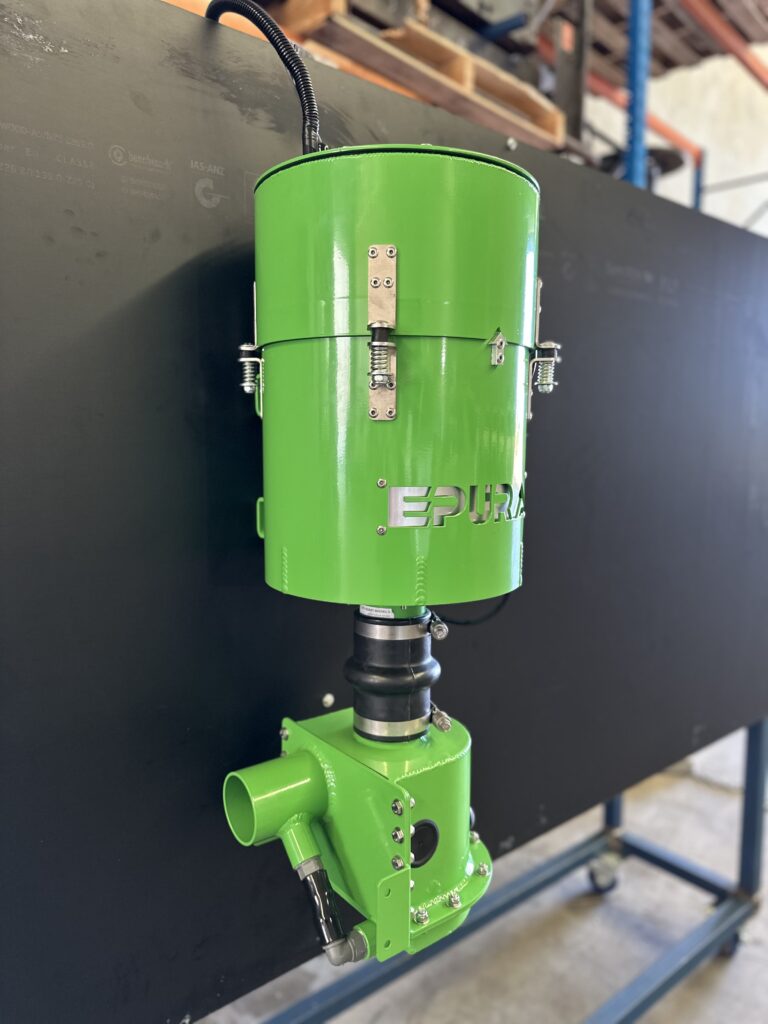
Self-cleaning engine filters utilize a dynamic process known as reverse pulse cleaning. Unlike static filters that hold onto dust until they are discarded, Epura systems actively reject contaminants while the engine is running.
The Mechanism of Action
The science involves a sophisticated interplay of sensors and pneumatics. Here is how the Epura filtration technology functions:
- Monitoring: Sensors continuously monitor the pressure differential (restriction) across the filter media.
- Triggering: When restriction reaches a pre-set limit, the system’s controller initiates a cleaning cycle.
- Pulsing: A burst of compressed air is shot into the filter in the reverse direction of normal airflow.
- Rejection: This reverse pulse dislodges the dust cake formed on the exterior of the filter element, which is then ejected from the housing via a scavenger system or gravity.
This self-cleaning filtration process ensures that the filter media remains near its original efficiency levels for thousands of hours, rather than hundreds. By maintaining low restriction, the system guarantees filtration efficiency optimization, ensuring the engine always receives the clean air it needs to perform.
For mining operations looking to modernize their fleet, the experts at Ready Resources provide the engineering and supply capabilities necessary to integrate these high-tech systems.
The Core Mechanism: Extending Asset Life Through Clean Air
The primary goal of any maintenance manager is to extend asset life. An engine is a massive capital investment; protecting its internal components—pistons, rings, and liners—is paramount. Epura engine filters are not just accessories; they are vital engine protection systems.
Preventing Engine Dusting
“Dusting” occurs when abrasive silica particles bypass the filtration system and enter the combustion chamber. Even a teaspoon of dust can ruin a high-horsepower engine. By utilizing self-cleaning filters, the system maintains a higher integrity seal. Because the filters are changed significantly less often (sometimes extending intervals by 10x or 20x), the frequency of opening the intake housing drops dramatically. This reduces the human error factor and creates a sealed, sterile environment for the engine intake.
Maintaining Optimal Air-to-Fuel Ratios
Sustainable engine performance relies on a precise mixture of air and fuel. When industrial filter technology allows restriction to creep up, the engine runs “rich.” This not only wastes fuel but also causes oil degradation and increased wear on turbochargers. Epura engine filters keep airflow consistent, ensuring the engine operates within its designed parameters. This consistency is the key scientific factor in engine asset life extension.
Key Benefits of Self-Cleaning Filters for Heavy Machinery
Implementing a self-cleaning engine filter benefits your operation across multiple verticals, from finance to reliability engineering.
- Extended Service Intervals: Instead of changing filters every 250 or 500 hours, Epura systems can run for thousands of hours.
- Reduced Downtime: Machines stay in the pit or on the road, not in the workshop.
- Fuel Efficiency: Consistent airflow prevents the fuel penalty associated with clogged filters.
- Asset Reliability: Engines run cooler and cleaner, aligning with the goals of asset reliability engineering.
To ensure these systems continue to deliver peak performance, regular checks are required. Our team offers specialized support through our Ready Resources – Services division to maintain and optimize your filtration setups.
Predictive Maintenance and Smart Filtration Technology
We are in the era of Industry 4.0, where predictive engine maintenance is replacing reactive repairs. Epura engine filters are a form of smart filtration technology. The control units on these systems can often provide data regarding filter load, cleaning frequency, and system pressure.
This data allows maintenance planners to predict engine filter lifespan extension accurately. Instead of guessing when a filter might fail, the system provides real-time feedback. This approach enables maintenance cost reduction by eliminating unnecessary parts inventory and labor hours.
Advanced particulate removal is no longer just about catching dust; it is about providing data-driven insights into the health of the machine. By integrating self-cleaning filters, you are upgrading your fleet to utilize high-efficiency filtration that communicates its status.
Operational Efficiency and ROI
The return on investment (ROI) for extended asset life technology like Epura is calculated by looking at the Total Cost of Ownership (TCO). While the initial installation of a self-cleaning housing is higher than a standard canister, the savings are realized quickly through:
- Lower Consumable Costs: Buying fewer replacement filters annually.
- Labor Savings: Reallocating mechanics to high-priority repairs rather than routine filter swaps.
- Engine Longevity: Delaying a $100,000+ engine rebuild by thousands of operational hours.
This contributes to significant maintenance cost reduction and improves the bottom line of the operation.
Empowering Your Workforce with Better Technology
Adopting engine filter technology like Epura also impacts your workforce. Changing large, heavy air filters on mining equipment is physically demanding and often requires working at heights. By reducing the frequency of this task, you improve safety outcomes.
Furthermore, maintaining these advanced systems requires a skilled workforce. As the industry shifts toward smart filtration technology, the demand for technicians who understand these systems grows. For those interested in working with cutting-edge industrial technology, we invite you to explore career opportunities at Ready Resources – Jobs.
The science is clear: passive filtration is a bottleneck for modern heavy industry. Epura engine filters offer a proven, scientific approach to engine filter lifespan extension and heavy equipment protection. By utilizing reverse pulse cleaning to reject contaminants and maintain optimal airflow, these systems solve the root cause of premature engine wear.
For operators serious about maintenance optimization and machinery reliability, the transition to self-cleaning filters is not just an upgrade—it is a necessity. It ensures that your most valuable assets remain operational, efficient, and protected against the harsh elements of the job site.
By investing in Epura filtration technology, you are effectively investing in the longevity of your fleet and the sustainability of your business model. The future of industrial engine filtration is self-cleaning, and it is available today to help you extend asset life.